
¿Cómo puedo proteger a mi hijo del sol?

¿Cuáles son los factores más importantes para proteger la piel?

Muchas familias finalmente comenzarán a disfrutar de los primeros rayos de sol, lo que también significa tomar una serie de precauciones para cuidar nuestra salud.

La piel de los niños tiene ciertas características que la diferencian de la piel de los adultos. Aunque es más suave, en realidad tiene una capa protectora externa más delgada (capa córnea), lo que significa que la probabilidad de erosión, infección o quemadura solar es considerablemente mayor que en los adultos. La falta de vello también contribuye a la fragilidad de la piel de los niños. Los adultos tienen una mayor cantidad de sebo en la piel y anticuerpos específicos en su piel que los protegen contra cualquier agresión externa, mientras que la piel de los niños está mucho más expuesta debido a estas deficiencias.
Sun protection in Sotogrande & Marbella International Montessori School
  1. Conoce el cuidado básico de la piel de los niños.
    Lo primero y más importante es la higiene de la piel. Teniendo en cuenta que la piel de los niños tiene menos defensas naturales contra las infecciones, no debemos descuidar el baño diario. Se recomienda que el baño sea corto, con agua tibia y jabones “sin jabón” o “sindets” (sin detergentes). De esta manera, al mismo tiempo que limpiamos la piel, la hidratamos.

    Inmediatamente después del baño y mientras la piel aún está húmeda, aplicar una sustancia hidratante en cualquier textura: aceite, loción, leche o crema sin perfumes.


  1. Evitar la exposición al sol..
    Esto es fundamental porque en la infancia se recibe el 50-80% de la exposición solar de toda una vida. La piel de los niños es más susceptible a las quemaduras solares y las quemaduras solares en la infancia duplican el riesgo de melanoma. Los hábitos saludables de exposición al sol hasta los 18 años reducen significativamente el riesgo de cáncer de piel.
  2. Elegir los protectores solares adecuados
    Los protectores solares ideales para niños son los físicos, ya que los protectores solares químicos presentan mayores riesgos de irritación y alergias. Los recién nacidos y los niños menores de un año no deben estar expuestos al sol directo si el índice ultravioleta es superior a 5.

    Los primeros rayos del sol de la temporada son los más peligrosos por dos razones: porque nos cogen desprevenidos, sin filtro, sin sombrero, etc., y porque la piel aún no ha sintetizado la melanina que la protegerá durante el resto del verano.

Sun protection in Sotogrande & Marbella International Montessori School
  1. Cómo elegir el protector solar químico adecuado y aplicarlo correctamente
    Hay 2 tipos de protectores solares, filtros físicos y filtros químicos. Los filtros físicos tienen un efecto pantalla que refleja la radiación solar para que no alcance la piel. Actúan como una sombra portátil. Los filtros químicos absorben la radiación solar y la transforman en radiación inofensiva para la piel. La mayoría de los protectores solares combinan ambos tipos de filtros para lograr una mayor protección.

    Los filtros físicos o minerales son los más seguros porque no se absorben, pero también son los peores estéticamente porque no penetran en la piel y dejan una capa blanquecina muy evidente.

Pero para evitar este efecto, muchos fabricantes han comenzado a usar filtros minerales en nanopartículas. Las nanopartículas son estructuras tan pequeñas que estos filtros ya no son visibles.

La crema siempre debe reaplicarse después de 2 horas. ¿Por qué? Porque el SPF mide la protección contra los rayos UVB, y la protección contra los rayos UVA es variable y no puede medirse. Si la crema asegura una protección de al menos 1/3 de la protección que ofrece para los rayos UVB, la palabra UVA debe estar circulada, indicando que la protección también es alta para este tipo de radiación.

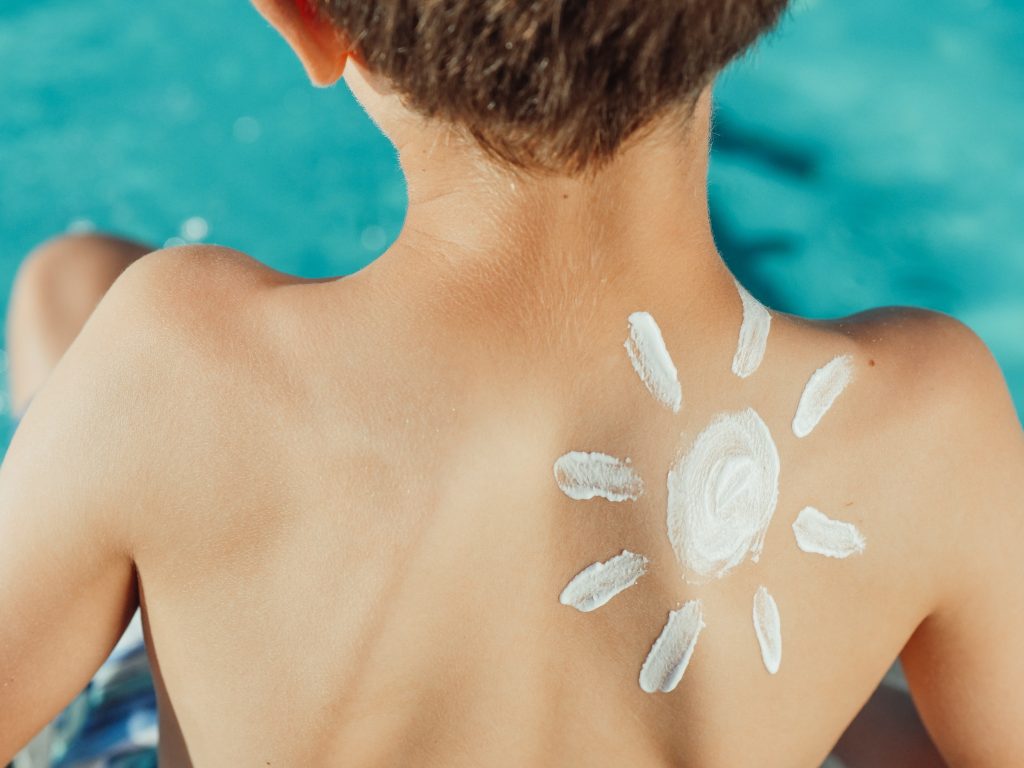
La cantidad de protector solar también es muy importante. La mayoría de las personas no aplican suficiente protector solar. Debes calcular 1 o 2 cucharaditas para cada área del cuerpo: 1 para cara y cuello, 2 para pecho y abdomen, 2 para espalda y 1 para cada brazo y pierna.

También es importante no olvidar áreas particularmente delicadas como los labios, las orejas o la parte posterior de los pies. Aplica el protector en la piel seca aproximadamente 30 minutos antes de la exposición al sol.

Los protectores solares resistentes al agua pueden resistir hasta 40 minutos de inmersión, y los protectores solares a prueba de agua hasta 80 minutos, pero aún así deben reaplicarse después de nadar.

La actividad de los protectores solares se altera con el calor, por lo que es importante dejar la crema en la sombra. Por supuesto, no debe usarse si ha caducado, ni si el período de vida útil ha sido superado una vez que el envase ha sido abierto: esta información se puede encontrar en un símbolo en forma de frasco abierto que indica el número de meses que la crema mantiene su actividad una vez que ha sido abierta.

El mejor cuidado es evitar la exposición al sol en el medio del día y especialmente en los meses de verano. El uso de un sombrero, gafas de sol y ropa con protector solar son hábitos que nos ayudarán a mantener el sol alejado de la piel.
Similar Posts

Leave a Reply

Your email address will not be published. Required fields are marked *

Sun protection in Sotogrande & Marbella International Montessori School

How can I protect my child from the sun?

What are the most important factors for protecting the skin?

Many families will finally start to enjoy the first rays of sunshine, which also means taking a series of precautions to look after our health.

Children’s skin has certain characteristics that differentiate it from adult skin. Although it is softer, it actually has a thinner protective outer layer (horny layer), which means that the probability of erosion, infection or sunburn is considerably greater than that of an adult. Hairlessness also contributes to the fragility of children’s skin. Adults have a greater amount of skin sebum and specific antibodies in their skin that protect them against any external aggression, whereas children’s skin is much more exposed due to these deficiencies.

Sun protection in Sotogrande & Marbella International Montessori School
  1. Know the basic care of children’s skin.
    The first and most important thing is skin hygiene. Bearing in mind that children’s skin has fewer natural defences against infection, we should not neglect daily bathing. It is recommended that the bath be short, with lukewarm water and “soap-free” or “syndets” soaps (without detergents). In this way, at the same time as we cleanse the skin, we moisturise it.

    Immediately after the bath and while the skin is still damp, apply a moisturising substance in any texture: oil, lotion, milk or cream without perfumes.


  1. Avoid exposure to the sun.This is fundamental because in infancy, 50-80% of the sun exposure of a lifetime is received. Children’s skin is more susceptible to sunburn and sunburn in childhood doubles the risk of melanoma. Healthy sun exposure habits up to the age of 18 significantly reduce the risk of skin cancer.
  2. Choosing the right sunscreens
    The ideal sunscreens for children are physical sunscreens, as chemical sunscreens present higher risks of irritation and allergies. Newborns and children under one year of age should not be exposed to direct sunlight if the ultraviolet index is higher than 5.

    The first sun rays of the season are the most dangerous for two reasons: because we are caught unawares, without a filter, without a hat, etc… and because the skin has not yet synthesised the melanin that will protect it for the rest of the summer.


Sun protection in Sotogrande & Marbella International Montessori School
  1. How to choose the right chemical sunscreen and apply it correctly
    There are 2 types of sunscreens, physical filters and chemical filters. Physical filters have a screen effect that reflects solar radiation so that it does not reach the skin. They act as a portable shade. Chemical filters absorb solar radiation and transform it into radiation that is harmless to the skin. Most sunscreens combine both types of filters to achieve higher protection.

    Physical or mineral filters are the safest because they are not absorbed, but they are also the aesthetically worst because they do not penetrate the skin and leave a very obvious whitish layer.


    But to avoid this effect, many manufacturers have started to use mineral filters in nanoparticles. The nanoparticles are such small structures that these filters are no longer visible.


    The cream must always be reapplied after 2 hours. Why? Because SPF measures protection against UVB rays, and protection against UVA rays is variable and cannot be measured. If the cream ensures a protection of at least 1/3 of the protection it offers for UVB rays, the word UVA should be circled, indicating that the protection is also high for this type of radiation.


    The amount of sunscreen is also very important. Most people do not apply enough sunscreen. You should calculate 1 or 2 teaspoons for each body area: 1 for face and neck, 2 for chest and abdomen, 2 for back and 1 for each arm and leg.


    It is also important not to forget particularly delicate areas such as lips, ears or the back of the feet. Apply to dry skin about 30 minutes before sun exposure.


    Water resistant sunscreens can withstand up to 40 minutes of immersion, and water proof sunscreens up to 80 minutes, but should still be reapplied after swimming.


    The activity of sunscreens is altered by heat, so it is important to leave the cream in the shade. Of course, it should not be used if it has expired, nor if the shelf life has been exceeded once the container has been opened: this information can be found on a symbol in the shape of an open jar that indicates the number of months that the cream retains its activity once it has been opened.


    The best care is to avoid exposure to the sun in the middle of the day and especially in the summer months. The use of a hat, sunglasses and sunscreen clothes are habits that will help us to keep the sun off the skin.


Similar Posts

Leave a Reply

Your email address will not be published. Required fields are marked *