
10 razones para elegir una escuela con Metodología Montessori

1. Respeto por el niño.

El niño es el protagonista de su aprendizaje. Elige sus propias actividades de aprendizaje, de acuerdo con su interés, nivel y estilo de aprendizaje. No pretendemos crear niños iguales: niños calmados y pasivos que pasan horas sentados sin estímulos atractivos que capten su atención, sino que aceptamos la singularidad del niño y potenciamos sus habilidades para alcanzar su máximo desarrollo.

2. Fomenta la independencia.

Queremos que nuestros hijos lleguen a ser adultos funcionales, y sin embargo, pasamos el día allanándoles el camino y limpiando los desórdenes que dejan atrás. De esta manera, difícilmente tendremos éxito. Cuando comienzan a comunicarse y descubrir el mundo a su alrededor, es el momento perfecto para darles sus primeras responsabilidades.

3. Trabajo multisensorial.

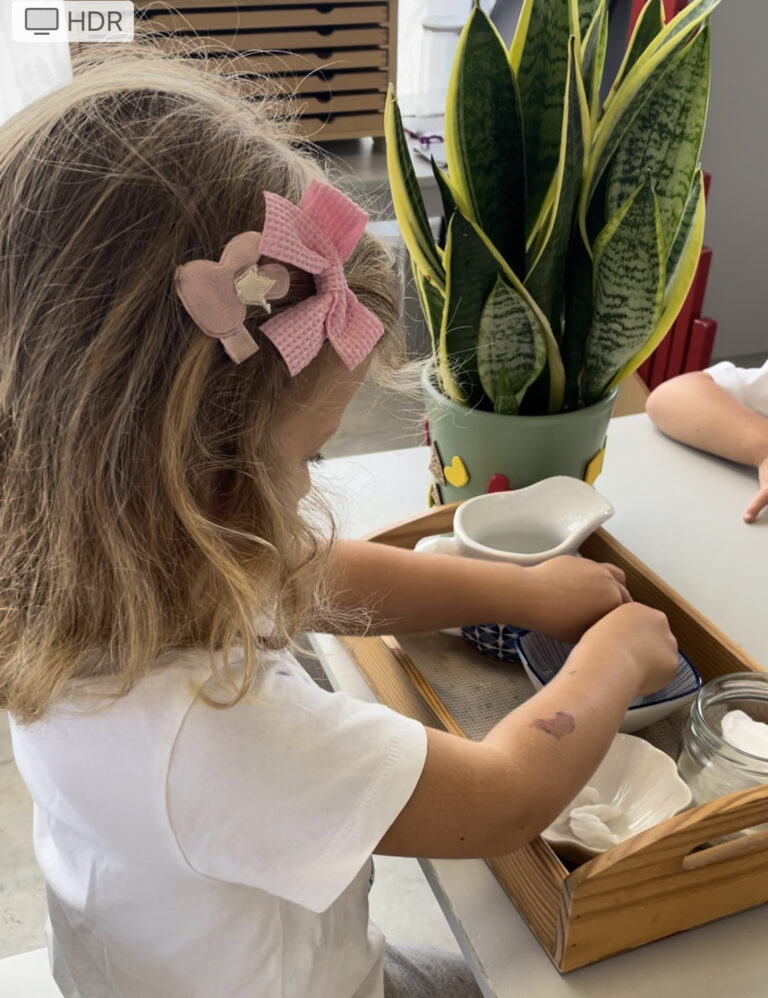
En la filosofía Montessori se da gran importancia a las manos. Se dice que las manos son la prolongación del cerebro, porque a través de ellas percibimos las sensaciones que van directamente a nuestras estructuras. Son como la clave de la inteligencia. Por eso todas las áreas se trabajan de manera sensorial, manipulando y explorando materiales.
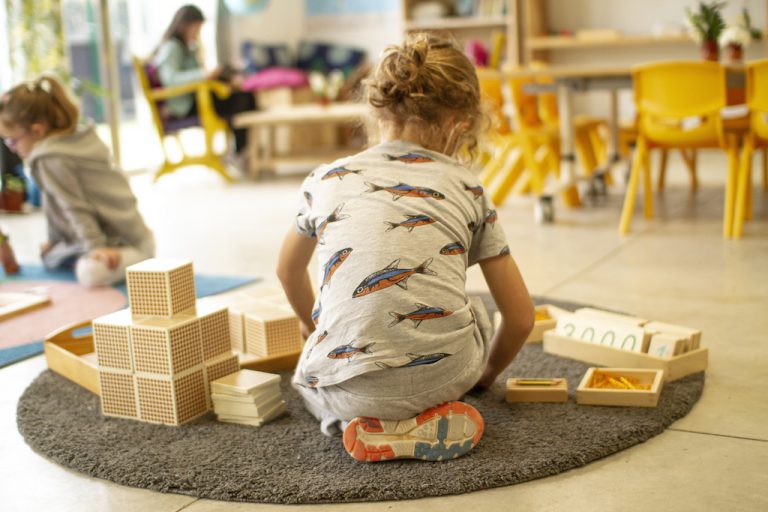
International Montessori School Sotogrande

4. Favorece la responsabilidad.

El niño aprende a trabajar, aprende el sentido del respeto por su propio trabajo y por el de los demás. Aprende la responsabilidad de cuidar el material que ha elegido, aprende de la oportunidad de usar el material libremente pero dentro de ciertos límites, aprende que las acciones tienen consecuencias naturales que derivan del uso de materiales crudos como la fragilidad del cristal o la sonoridad del metal.

5. Es universal.

La metodología se adapta al niño, no el niño al método. Por lo tanto, no hay adaptaciones curriculares, no hay aulas específicas y no hay clases de religión porque es un método que acoge cualquier etnia o creencia en su plenitud.

6. Toma en cuenta las necesidades e intereses del niño.

La clase cambia a medida que el niño cambia. Los materiales son diferentes, los tiempos son diferentes, y el único reloj que marca el tiempo es el del niño. El cambio de nivel lo solicita el niño, no el adulto, y ocurre en cualquier momento durante el año escolar.
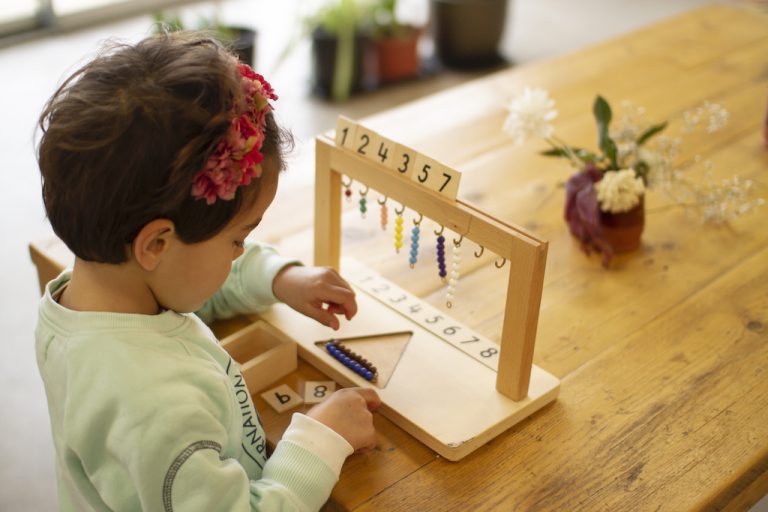
International Montessori School Sotogrande

7. Es una filosofía de vida.

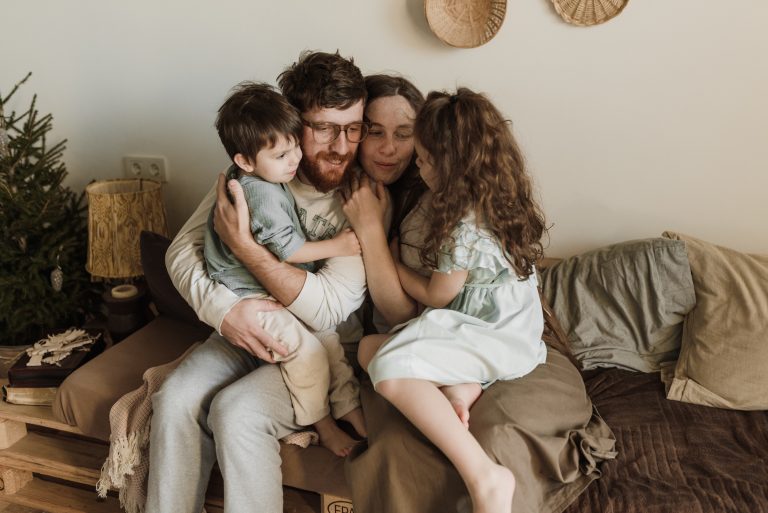
Educar en Montessori es educar en valores, educar en el presente para el futuro. La familia es una parte fundamental del proceso y se integra en la escuela de manera natural. La escuela transmite a los padres los valores de la filosofía para unir los criterios educativos y recibir de manera coherente la educación de la vida.

8. Un ambiente preparado para el aprendizaje.

Esto se refiere a un ambiente que ha sido cuidadosamente organizado para el niño, diseñado para fomentar el autoaprendizaje y el crecimiento. Desarrolla aspectos sociales, emocionales e intelectuales y responde a las necesidades de orden y seguridad. Las características de este Ambiente Preparado permiten que el niño se desarrolle sin la asistencia y supervisión constante de un adulto. El diseño de estos ambientes se basa en los principios de simplicidad, belleza y orden.

9. Los materiales en sí.

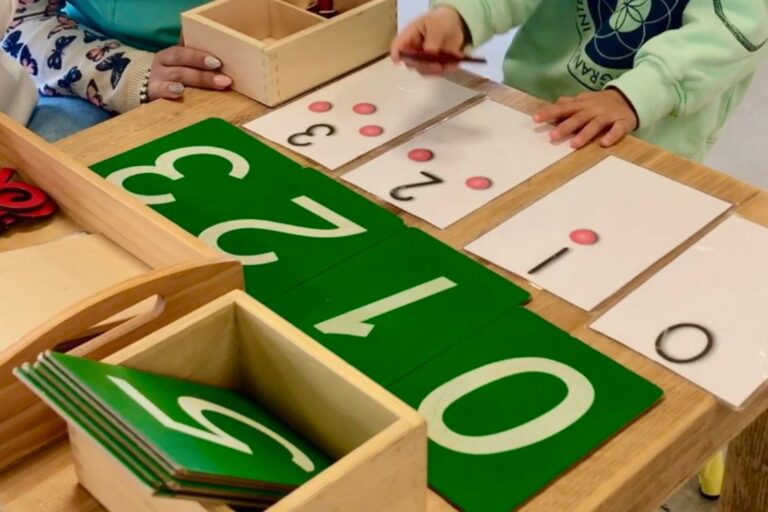
María Montessori elaboró un material didáctico específico que constituye el eje fundamental para el desarrollo e implantación de su método. Están diseñados para captar la curiosidad del niño, para guiarlo por el deseo de aprender. Estos materiales didácticos se pueden utilizar individualmente o en grupos. Otra característica es que casi todo el equipo es autocorrectivo, de modo que ninguna tarea puede completarse incorrectamente sin que el niño se dé cuenta por sí mismo.

10. Crear niños felices, autónomos, críticos y respetuosos.

Educar en valores es educar responsablemente. Un niño que se siente escuchado, amado, integrado, aceptado tal como es, es un niño capaz de expresar sus emociones, capaz de cuestionar sus pensamientos mientras respeta las diferencias y acepta lo que le une a los demás. Educar con Montessori es educar para la felicidad. ¿Hay acaso un objetivo más importante en la vida que ser feliz?
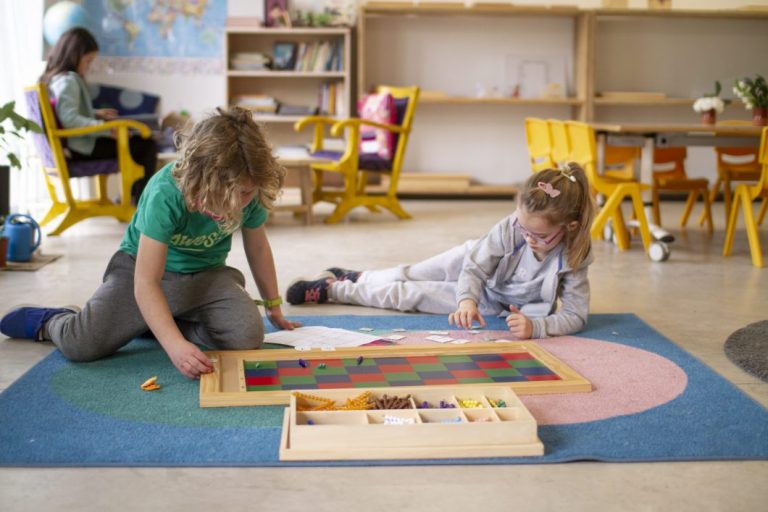
International Montessori School Sotogrande

Similar Posts

Leave a Reply

Your email address will not be published. Required fields are marked *

10 reasons to choose a school with Montessori Methodology - Student working with the abacus in class - International Montessori School in Sotogrande, Cádiz

10 reasons to choose a school with Montessori Methodology

1. Respect for the child.

The child is the protagonist of his learning. The child chooses his own learning activities, according to his interest, level and style of learning. There is no pretension to create equal children: calm and passive children who spend hours sitting without attractive stimuli that capture their attention but we accept the uniqueness of the child and enhance their abilities to reach their maximum development.

2. Encourages independence. 

We want our children to one day become functional adults and yet we spend the day paving the way for them and cleaning up the mess they leave behind. In this way, we will hardly succeed. When they begin to communicate and discover the world around them, it is the perfect time to give them their first responsibilities.

3. Multisensory work. 

In the Montessori philosophy great importance is given to the hands. It is said that the hands are the prolongation of the brain, because through them we perceive the sensations that go directly to our structures. They are like the key to intelligence. That is why all areas are worked in a sensory way, manipulating and exploring materials.

International Montessori School Sotogrande

4.  It favors responsibility.

The child learns to work, learns the sense of respect for his own work and that of others. He learns the responsibility of taking care of the material he has chosen, he learns from the opportunity to use the material freely but within certain limits, he learns that actions have natural consequences that derive from the use of raw materials such as the fragility of the crystal or the sonority of the metal.

5. It is universal. 

The methodology adapts to the child not the child to the method. Therefore, there are no curricular adaptations, there are no specific classrooms and there are no religion classes because it is a method that embraces any ethnicity or belief in its fullness.

6. It takes into account the needs and interests of the child. 

The classroom changes as the child changes. The materials are different, the times are different, and the only clock that marks time is that of the child. The change of level is requested by the child, not the adult, and occurs at any time during the school year.

International Montessori School Sotogrande

7. It is a philosophy of life. 

To educate in Montessori is to educate in values, to educate in the present for the future. The family is a fundamental part of the process and is integrated into the school in a natural way. The school transmits to the parents the values of philosophy in order to unite the educational criteria and to receive in coherence the education of life.

8. A prepared environment for learning.

This refers to an environment that has been carefully organized for the child, designed to encourage self-learning and growth. It develops social, emotional, and intellectual aspects and responds to needs for order and security. The characteristics of this Prepared Environment allow the child to develop without the constant assistance and supervision of an adult. The design of these environments is based on the principles of simplicity, beauty and order.

9. The materials themselves.

María Montessori elaborated a specific didactic material that constitutes the fundamental axis for the development and implantation of her method. They are designed to capture the child’s curiosity, to guide him or her by the desire to learn. These didactic materials can be used individually or in groups. Another characteristic is that almost all the equipment is self-correcting, so that no task can be completed incorrectly without the child realizing it for himself.

10. Create happy, autonomous, critical and respectful children.

Educate in values in educating responsibly. A child who feels listened to, loved, integrated, accepted as he is, is a child capable of expressing his emotions, capable of questioning his thoughts while respecting differences and accepting what binds you to the other. To educate with Montessori is to educate for happiness. Is there perhaps a more important goal in life than to be happy?

International Montessori School Sotogrande

Similar Posts

Leave a Reply

Your email address will not be published. Required fields are marked *